Tian·2Questions to Heaven: Astronomy and Calendars
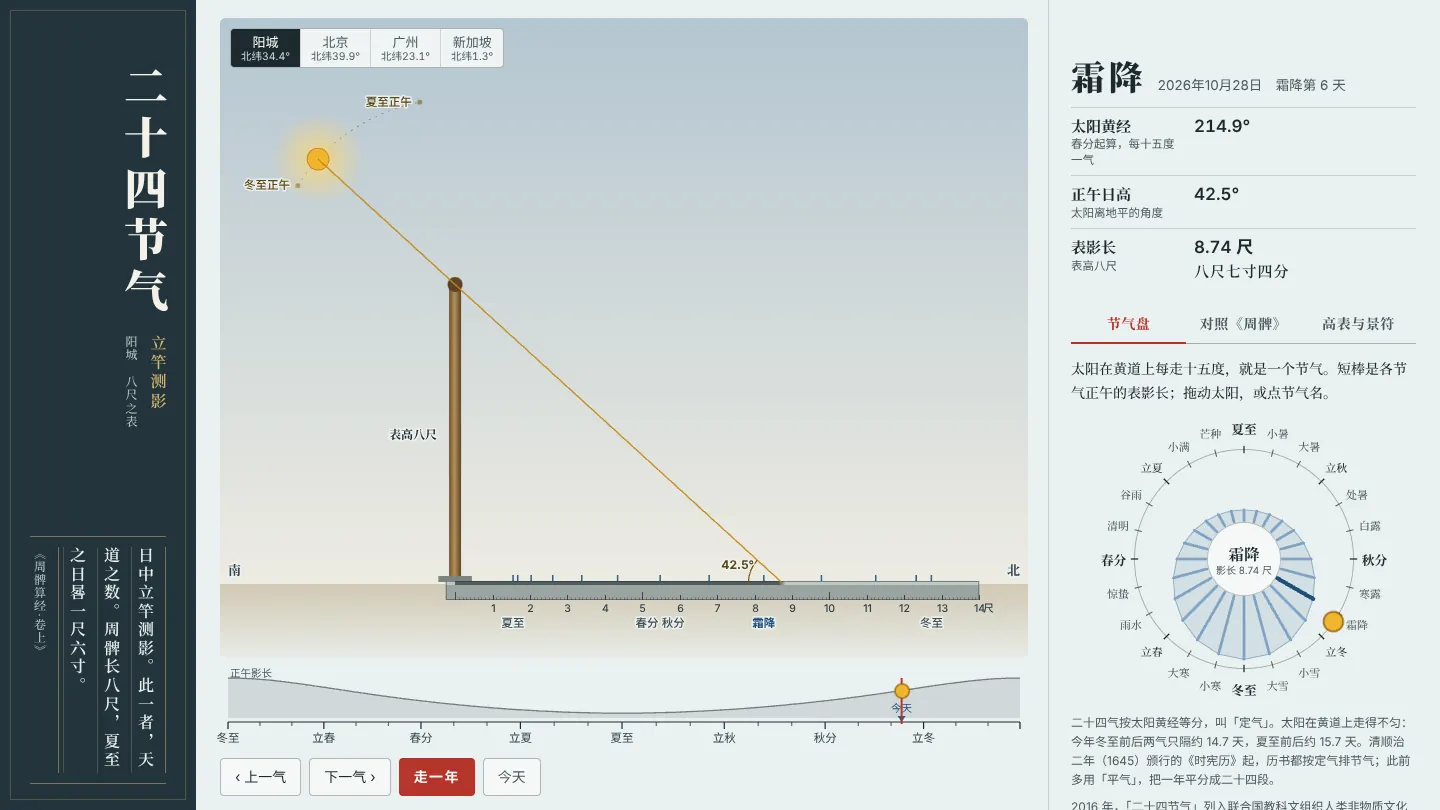
The 24 Solar Terms: Measuring the Gnomon’s Shadow
An 8-chi gnomon, a year of shadows
- Accession no.
- Tian·2
- Category
- Interactive works
- Period
- Han–Qing
- Directed by
- Hu Yilin
- Made by
- Claude Opus 5.5
- Similar commission
- from S$18.75
About the exhibit
Set up a gnomon 8 chi tall, lay a graduated scale, the gui, flat on the ground from its foot towards the north, and see where the gnomon’s shadow falls on the scale at noon: this is “measuring the shadow of an upright pole”. The shadow is longest at the winter solstice and shortest at the summer solstice; measure precisely how its length changes over the year, and you can fix the winter solstice and the length of the year. The 24 solar terms in use today divide the sun’s course along the ecliptic into steps of 15 degrees. In 2016 “The Twenty-Four Solar Terms” was inscribed on UNESCO’s Representative List of the Intangible Cultural Heritage of Humanity.
The Zhoubi Suanjing (Arithmetical Classic of the Gnomon) records a set of shadow lengths for the 24 solar terms: 1 zhang 3 chi 5 cun at the winter solstice and 1 chi 6 cun at the summer solstice, changing evenly by 9 cun 9⅙ fen from each term to the next. Calculating from the latitude of Yangcheng (present-day Dengfeng, Henan, about 34.4 degrees north) and the sun’s declination gives about 1 zhang 2 chi 7 cun at the winter solstice and about 1 chi 5 cun 5 fen at the summer solstice, and the differences are larger around the spring and autumn equinoxes; the Rites of Zhou, for its part, says “the shadow at the solstice is 1 chi 5 cun”. Why these figures differ — because of the measurements, or because of the model used to calculate them — is a question worth pursuing. In the Kaiyuan reign of the Tang, Yixing, Nangong Yue and others measured shadows at many places from north to south and tested the old claim that the shadow length differs by 1 cun for every 1,000 li north or south; in the Yuan, Guo Shoujing built an observatory at Dengfeng, set up a 40-chi gnomon and used a shadow definer to read the tip of the shadow cast by the centre of the sun, making shadow measurement more precise.
How this work was made
The dates of the solar terms come from a simplified algorithm for the sun’s position (accurate to about a hundredth of a degree), which gives the moment of each solar term this year, shown in Beijing time (the same as Singapore time). Shadow lengths are calculated directly from the latitude of the observing site, the sun’s declination and the height of the gnomon; the obliquity of the ecliptic is set by default to today’s 23.44 degrees and can be changed to about 23.7 degrees, its value 2,000 years ago. The blurred width of the shadow’s tip is calculated from the sun’s apparent diameter of about half a degree. The Zhoubi values are derived from the book’s rule that “each term decreases or increases by 9 cun 9⅙ fen”, and agree with the figures it lists. The observatory and the shadow definer show the principle only and are not to scale.
Sources and references
- Zhoubi Suanjing, chapters 1 and 2
- Rites of Zhou, “Offices of Earth: Grand Minister of Education”
- History of Yuan, “Treatise on Astronomy” (Guo Shoujing’s instruments and gnomon; the shadow definer)
- UNESCO Representative List of the Intangible Cultural Heritage of Humanity: The Twenty-Four Solar Terms (2016)
- Jean Meeus, Astronomical Algorithms (simplified algorithm for the sun’s position)
Want something like this? See how to commission an interactive teaching page →
Spotted an error in the history, data or sources? Please write to [email protected].
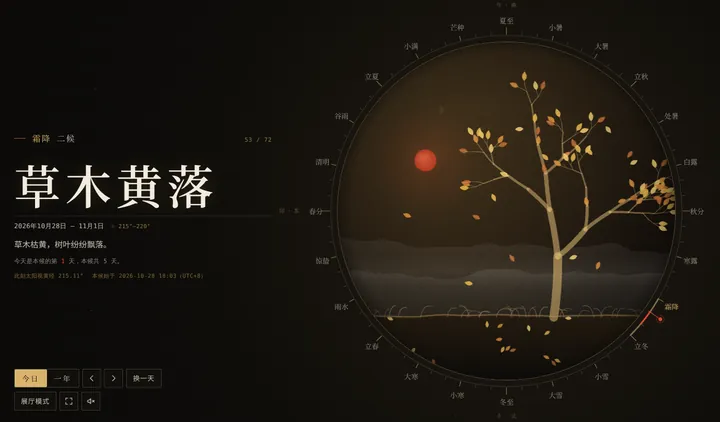 Tian·4The 72 PentadsFive days to a pentad: 72 generated vignettes cycling through a whole year
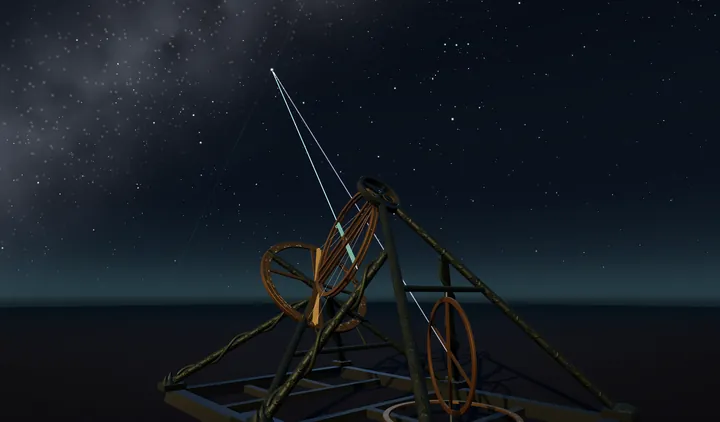 Tian·5Guo Shoujing and the Simplified ArmillaAn armillary sphere split into two instruments that do not block each other; turn the double declination ring to sight a star
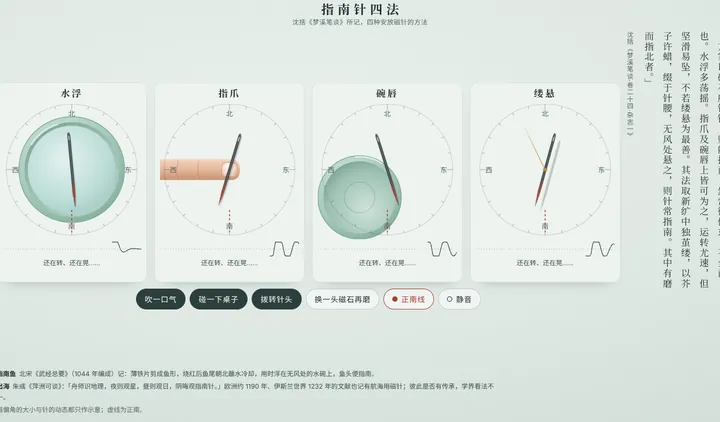 Hai·2Four Ways to Hang a Compass NeedleFour ways to mount a needle, recorded by Shen Kuo
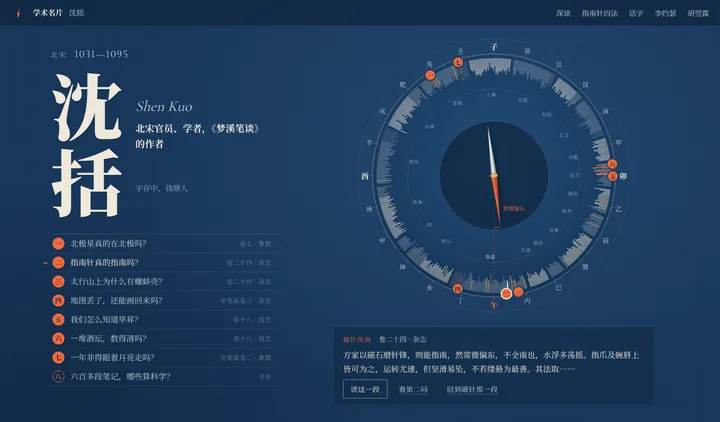 Ya·3Shen Kuo’s Scholar CardAlways Slightly East: turn a compass laid out from the Dream Pool Essays
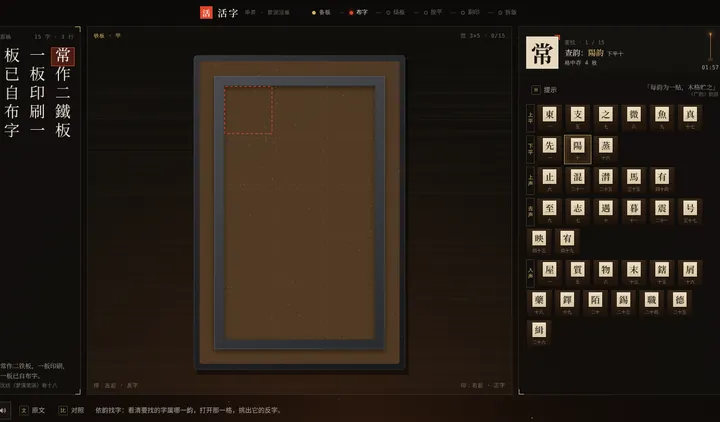 Ya·5Movable Type: Bi Sheng’s Clay TypeSet a plate of clay movable type by hand, as recorded in the Dream Pool Essays
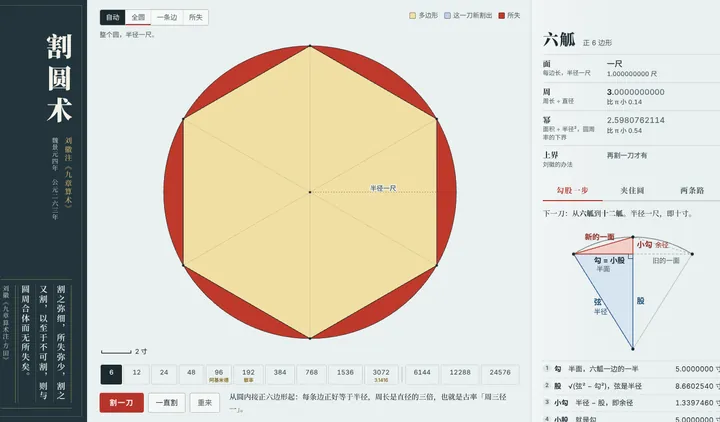 Tian·1Cutting the CircleHow Liu Hui closed in on π, one cut at a time