Ya·6Song: Heavenly Craft and RefinementFeatured
The Water-Powered Astronomical Clock Tower
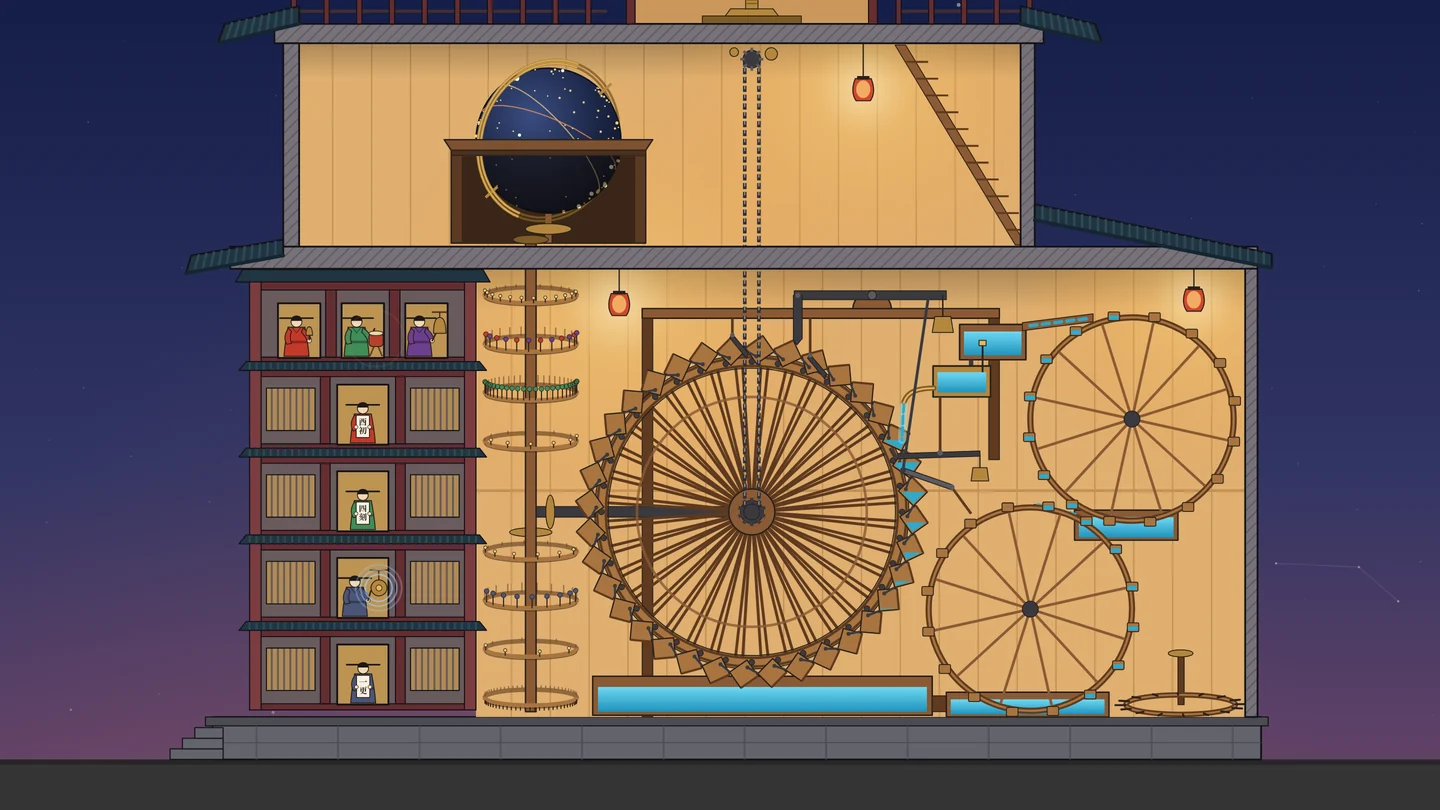
A cutaway look at an astronomical clock tower driven by water
- Accession no.
- Ya·6
- Category
- Interactive works
- Period
- Song
- Directed by
- Hu Yilin
- Made by
- Claude Opus 5.5
- Similar commission
- from S$18.75
About the exhibit
The Water-Powered Astronomical Clock Tower was a large instrument for astronomy and timekeeping, built in Bianjing during the Yuanyou reign of the Northern Song by Su Song, Han Gonglian and others. According to Su Song’s Memorial Presenting the Armillary Clock, the imperial order came in the winter of the first year of Yuanyou (1086), and a workshop was set up in the eighth month of the following year. A small model was completed first, in the fifth month of the third year of Yuanyou (1088); the work was finished in the 12th month and installed in the Jiying Hall. The armillary sphere and other parts were later cast in bronze, and the whole tower is generally thought to have been completed in the seventh year of Yuanyou (1092).
The tower stood nearly 12 metres high, in three tiers. On the top tier, an armillary sphere for observing the heavens was turned by water power to follow the rotation of the sky. On the middle tier, a celestial globe sat in a wooden case, half above its top and half hidden below, turning in step with the heavens. The bottom tier was a five-storey wooden pagoda in which figures rang hand-bells, beat drums and struck a bell at set times, held up plaques announcing the double-hours and the ke, and at night struck a gong for the watches. All three were driven by the same wheel. New Design for an Armillary Clock describes it as “1 zhang 1 chi in diameter, with 72 spokes set in pairs on one hub, making 36 bays”. Water from the constant-level tank ran steadily into the scoops around the wheel’s rim, and a set of levers called the “heavenly balance” let the wheel turn one step only when a scoop was full. The mechanism did much the same job as the escapement in later mechanical clocks.
After the Jingkang Incident (1127), the Jin dismantled the tower and carried it off to Yanjing, where it could not be reassembled as it had been; in the end it was lost. In the early Shaosheng years Su Song completed New Design for an Armillary Clock, recording the tower’s construction and dimensions, with more than 60 illustrations. In modern times Liu Xianzhou, Joseph Needham, Wang Zhenduo and others have studied it and worked out reconstructions from the book; Wang Zhenduo completed a reconstructed model in 1958, and in 1994 the National Museum of Natural Science in Taichung built a full-size working reconstruction.
What is illustrative
The proportions of the cutaway, the positions and connections of the parts and the shapes of the levers of the heavenly balance are illustrations drawn from the descriptions in New Design for an Armillary Clock, not measured drawings. The book does not say how long the wheel takes for each step; here it is 2 minutes 24 seconds, one six-hundredth of a day and night. The words on the figures’ plaques, the moments within each half double-hour when the ke plaques appear and the way the night watches are announced are also illustrative: the full-size reconstruction in Taichung strikes the gong 38 times a night, but here only nightfall, the five watches, daybreak and sunrise are announced.
Time is reckoned in local mean solar time for Bianjing, with 100 ke in a day and night; nightfall and daybreak are taken as 2½ ke after sunset and before sunrise. The stars are shown in their present-day positions.
Sources and references
- Su Song, New Design for an Armillary Clock (Xin Yixiang Fayao), with the appended Memorial Presenting the Armillary Clock (Daizhige transcription)
- “Water-Powered Astronomical Clock Tower”, China Digital Museum of Mechanical Engineering, after Zhang Baichun et al., Major Scientific and Technological Inventions and Creations of Ancient China
- “Escapement of the Water-Powered Astronomical Clock Tower”, China Science and Technology Museum
- “Water-Powered Astronomical Clock Tower” exhibit guide, National Museum of Natural Science, Taichung
- “Water-Powered Astronomical Clock Tower”, Chinese Wikipedia
- “Su Song”, Wikipedia
Want something like this? See how to commission an interactive teaching page →
Spotted an error in the history, data or sources? Please write to [email protected].
 Xu·1Heavenly CraftSix hands-on exhibits of ancient science and technology
 Ya·3Shen Kuo’s Scholar CardAlways Slightly East: turn a compass laid out from the Dream Pool Essays
 Ya·1The Dougong BracketA Song-style bracket set, built according to the Treatise on Architectural Methods
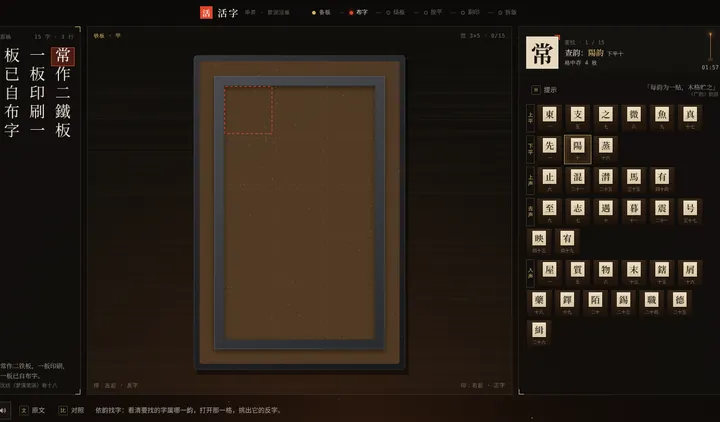 Ya·5Movable Type: Bi Sheng’s Clay TypeSet a plate of clay movable type by hand, as recorded in the Dream Pool Essays
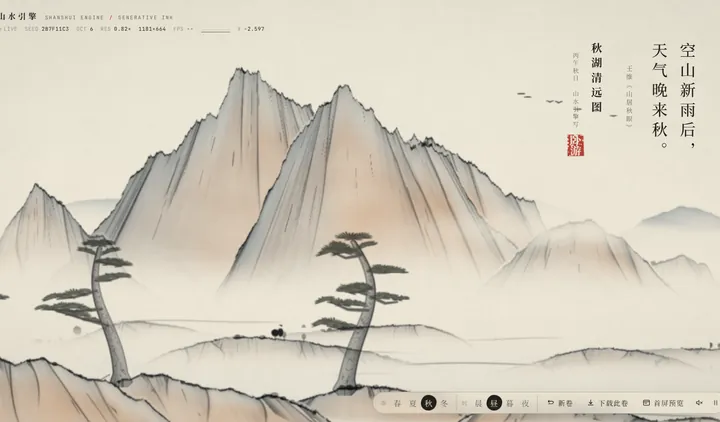 Ya·2The Three Distances of LandscapeAn ink landscape scroll generated in real time