Ya·7Song: Heavenly Craft and RefinementFeatured
Bianjing: Along the River During the Qingming Festival
From the countryside, along the Bian River and past the Rainbow Bridge into the city of Bianjing
- Accession no.
- Ya·7
- Category
- Online exhibitions
- Period
- Song
- Directed by
- Hu Yilin
- Made by
- Claude Opus 5.5
- Similar commission
- from S$50
About the exhibit
Along the River During the Qingming Festival was painted by Zhang Zeduan of the Northern Song in ink and colour on silk; it measures 24.8 cm high and 528.7 cm long and is now in the Palace Museum, Beijing. The scroll unrolls from right to left. It begins with woods and a train of donkeys in the countryside outside the city, then follows the Bian River downstream, where large boats come and go; beyond the Rainbow Bridge that spans the river, shops line both banks; then it passes through the city gate into the streets and markets inside.
The painting is followed by 14 colophons by 13 people of the Jin, Yuan and Ming dynasties. The earliest, written by Zhang Zhu of the Jin in the 26th year of Dading (1186), records the painter: “Zhang Zeduan of the Hanlin Academy, courtesy name Zhengdao, was a native of Dongwu. As a youth he studied and travelled to the capital to pursue his learning; later he took up painting. He excelled at ruled-line painting (jiehua) and was especially fond of boats and carts, markets and bridges, city walls and lanes, forming a school of his own.” Zhang Zhu also cites Mr Xiang’s Record of Comments on Paintings, which says that both Contest for the Prize on West Lake and Along the River During the Qingming Festival were “selected for the divine class”. After Zhang Zhu’s colophon come poems by Zhang Gongyao, Li Quan, Wang Jian and Zhang Shiji of the Jin, and colophons by Yang Zhun, Liu Han and Li Qi of the Yuan and by Wu Kuan, Li Dongyang, Lu Wan, Feng Bao and Rushou of the Ming; Li Dongyang wrote two.
The Rainbow Bridge in the painting, the small tavern at the bridgehead, the wine house in the city with a lantern sign marked “zhengdian” (licensed wine house) and the doctor’s shop with upright signboards naming its medicines all have counterparts in Meng Yuanlao’s Dreams of Splendour of the Eastern Capital. After fleeing south, Meng Yuanlao wrote down from memory the city and customs of Bianjing under the Northern Song; his preface is dated the 17th year of Shaoxing (1147). The notes in this work quote several passages from it.
Coming to life
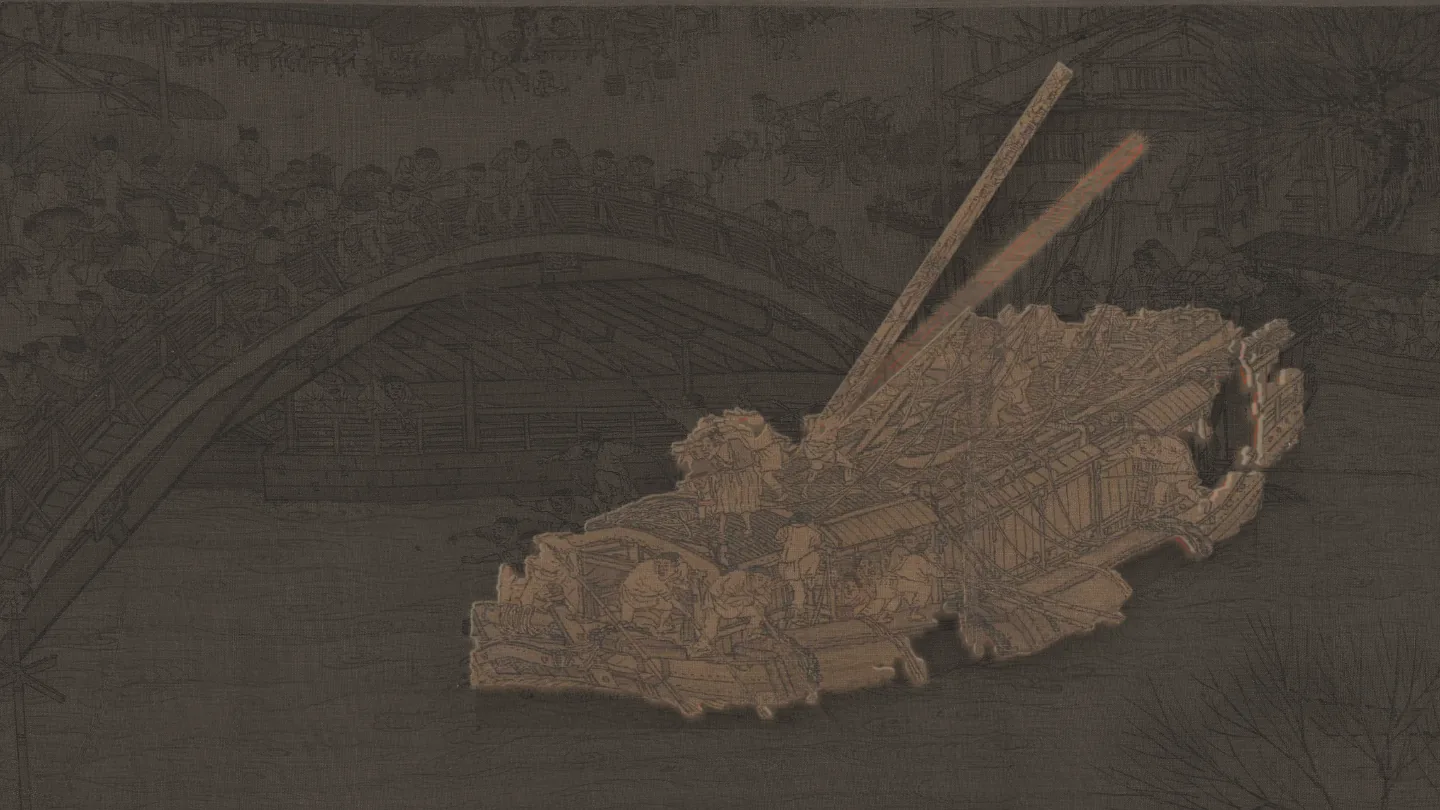
Click a spot in the painting and the view zooms in. A vermilion brush follows the painting’s own ink lines and traces the thing stroke by stroke while everything around it fades to pale ink; once it is traced, it lifts off the silk, moves a little as it would in the scene, then settles back into place as the red lines slowly fade. At the start of the scroll the train of donkeys steps forward and a sedan chair decked with willow branches jolts along; the big boats by the Bian River rise and fall on the water, boatmen work the sculling oars together, and trackers on the bank bend double as they haul on the towlines; under the Rainbow Bridge the big boat lowers its mast while the crowd surges across the bridge; the small tavern’s wine banner flutters in the wind and its lantern sign lights up; an ox cart’s wheels roll along the street; people on the flat bridge lean out to look at the river; a camel emerges from the city gate; the gate tower comes apart like an exploded diagram, its roof, dougong brackets and main body rising and separating layer by layer before closing up again; the lantern sign of the Sun Yang wine house lights up and its round lanterns sway gently; in the doctor’s shop a man bows with hands clasped; and at the well, people draw water.
“Unroll” sets the scroll unrolling to the left by itself from the beginning, passing these details and pausing at each in turn to let it come to life; the surface of the Bian River ripples gently the rest of the time, too. The silhouettes that lift off are cut out of the painting exactly as they are, with nothing added; the small patch left bare while one is away is filled in to match the colour of the surrounding silk. If your device is set to reduce motion, the work opens in “Still” mode.
Image and notes
The scroll here is a single image stitched together from photographs of the whole handscroll, more than 250,000 pixels wide. The painting can be enlarged to the full resolution of the photographs, the colophons to half of that. The painting and the colophons come from two sets of photographs, joined at the silk spacer before the first colophon, where the colour has been blended from one set to the other.
“Countryside”, “Bian River”, “Rainbow Bridge”, “Streets”, “City Gate” and “Inside the City” are sections made for ease of browsing; the painting itself has no sections, and the boundaries between them are approximate. The notes on details describe what can be seen in the painting. Where they quote Dreams of Splendour of the Eastern Capital, the point is that the book records counterparts to what is painted, not that the two correspond one to one. The transcriptions of the colophons are taken from the originals and are partial.
Sources and references
- Zhang Zeduan, Along the River During the Qingming Festival, handscroll, Palace Museum, Beijing (photograph of the whole scroll: Jiguzuo, jiguzuo.com, used under licence)
- The original colophons at the end of the scroll by Zhang Zhu, Zhang Gongyao, Li Quan, Wang Jian, Zhang Shiji, Yang Zhun, Liu Han, Li Qi, Wu Kuan, Li Dongyang, Lu Wan, Feng Bao and Rushou
- Meng Yuanlao, Dreams of Splendour of the Eastern Capital (Project Gutenberg e-text)
- Yu Hui, “What the Colophons of Along the River During the Qingming Festival Tell You about the Dangers and the Rise and Fall Hidden in the Bustling Streets”, The Paper, 13 October 2015
Want something like this? See how to commission an online exhibition →
Spotted an error in the history, data or sources? Please write to [email protected].
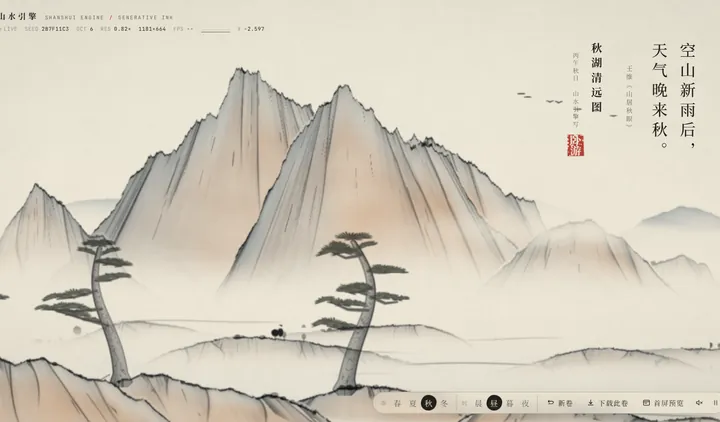 Ya·2The Three Distances of LandscapeAn ink landscape scroll generated in real time
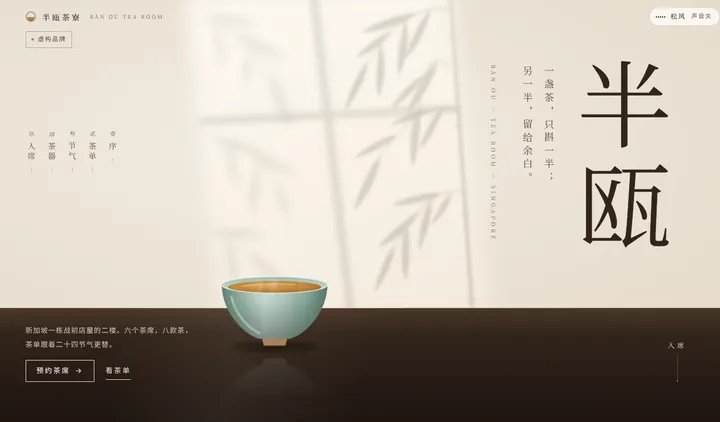 Ya·4Tea RoomThe official website of a fictional tea room
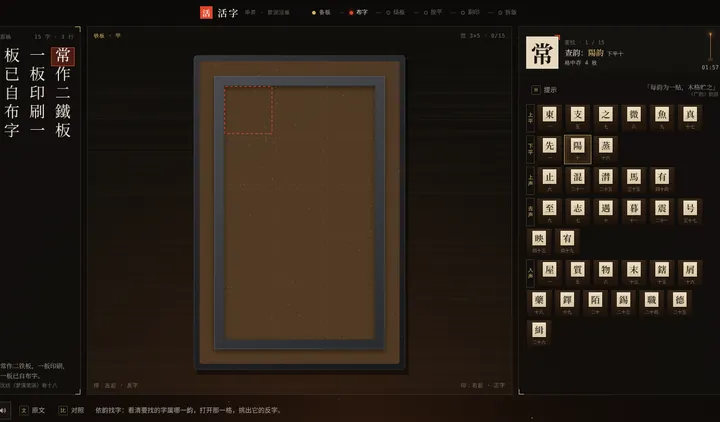 Ya·5Movable Type: Bi Sheng’s Clay TypeSet a plate of clay movable type by hand, as recorded in the Dream Pool Essays
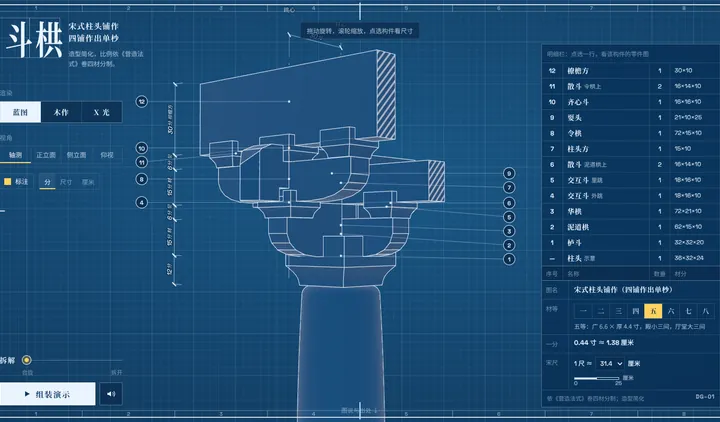 Ya·1The Dougong BracketA Song-style bracket set, built according to the Treatise on Architectural Methods
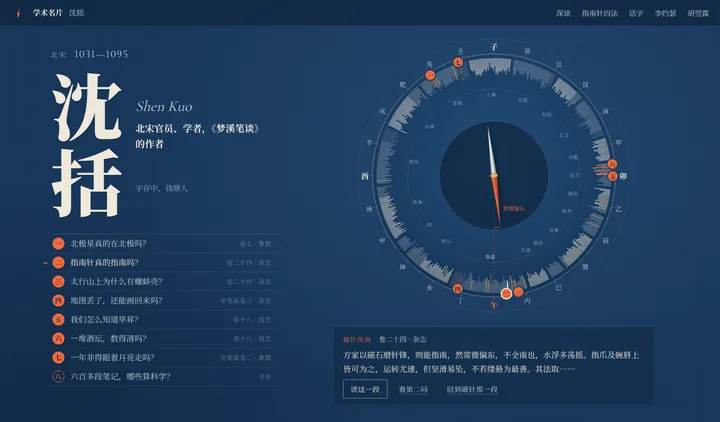 Ya·3Shen Kuo’s Scholar CardAlways Slightly East: turn a compass laid out from the Dream Pool Essays
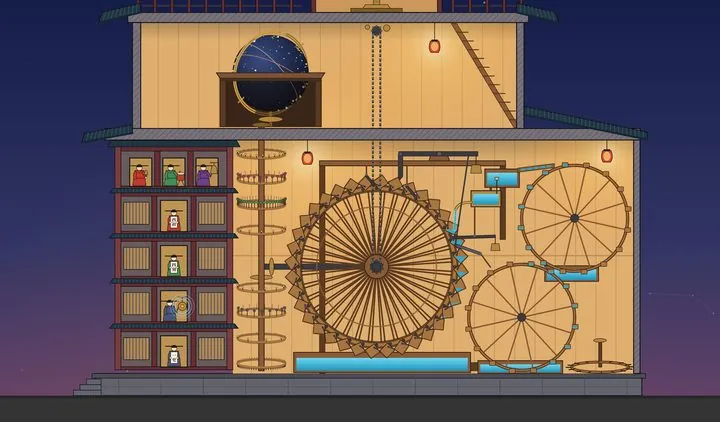 Ya·6The Water-Powered Astronomical Clock TowerA cutaway look at an astronomical clock tower driven by water