Jiang·3Lecture HallFeatured
The Thousand Character Classic: A Picture for Every Couplet
Nineteen minutes, 125 couplets: a silhouette picture for each, with Chinese and English subtitles
- Accession no.
- Jiang·3
- Location
- Lecture Hall
- Category
- Video production
- Period
- Northern and Southern Dynasties
- Running time
- 18:59
- Directed by
- Hu Yilin
- Made by
- Claude Opus 5.5
- Similar commission
- from S$18.75
About the exhibit
The Thousand Character Classic is a rhymed text in four-character lines compiled by Zhou Xingsi under the Liang dynasty in the sixth century. None of its thousand characters repeats, and for well over a thousand years it was one of the most widely used primers for learning to read. This video performs it from beginning to end: two lines make a couplet, each couplet gets a scene of about nine seconds. The original text runs down the right of the frame in vertical script, its first character appearing on its own before the rest; the picture is a small silhouette scene drawn to the meaning of the couplet – stars and planets, palaces and carriages, fields and looms, music and banquets; and two subtitles run underneath, a modern Chinese paraphrase above and an English translation below.
The twelve chapters above follow the sections of our Thousand Character Classic: One Line, One Scene: heaven and earth, the bounty of the land and the sage rulers of antiquity; then self-cultivation, family duties and the constant virtues; then the two capitals and their palaces, books and talent, ministers and generals, the mountains and rivers of the realm; and finally farming, conduct, home life and the closing words of self-exhortation. If a couplet makes you want to look up its sounds, meanings and allusions, find the same line in that work.
Follow the rhymes
Every line has four characters and every second line rhymes, so it takes two lines to make a complete unit – a couplet. The 250 lines make exactly 125 couplets. The rhyme changes eight times, and each change of rhyme tends to bring a change of subject. Click any section below (rhyme groups follow the Pingshui rhyme tables) to start from there.
- 0:00-ang rhyme 荒, 张, 藏, 阳 … 羊: heaven and earth, the bounty of the land and the ancient rulers, down to “Mozi grieved to see white silk dyed”
- 3:51-ing rhyme (departing tone) 圣, 正, 听, 庆 … 咏: virtue, the value of time, serving parents and taking office
- 6:06-i rhyme 卑, 随, 仪, 儿 … 縻: rites and music, family and friends
- 7:45-ing rhyme (level tone) 京, 泾, 惊, 灵 … 冥: the two capitals, books and talent, ministers and generals, the Nine Provinces
- 12:15Entering tone 穑, 稷, 陟, 直 … 逼: farming, the Golden Mean and knowing when to stop
- 13:45-iao rhyme 寥, 遥, 招, 条 … 霄: retirement among woods and streams
- 14:48-ang rhyme 箱, 墙, 肠, 糠 … 亡: reading and the daily round at home
- 17:12-iao rhyme (departing tone) 啸, 钓, 妙, 笑 … 诮: skills and crafts, the passing of time and self-exhortation
- 18:42The closing particles: yan, zai, hu, ye
Inventors among the thousand characters
Near the end, the Classic names a string of people – almost an honours list of ancient talent. 17:12“Lü Bu’s archery, Yiliao’s juggling; Ji Kang’s zither, Ruan Ji’s whistling.” 17:21“Meng Tian’s brush, Cai Lun’s paper; Ma Jun’s ingenuity, Prince Ren’s fishing.”
That Meng Tian invented the brush is what old books say; brushes excavated from Warring States tombs show that it existed before him. Cai Lun presented his improved paper to the Han court in 105. Ma Jun was a craftsman of the state of Wei in the Three Kingdoms period; according to Fu Xuan, he built a south-pointing chariot, improved the silk loom and made a chain pump for lifting water. Prince Ren, who baited his hook with fifty oxen and landed a giant fish in the Eastern Sea, comes from the Zhuangzi. The next couplet says that all these arts “resolved disputes and benefited the people”. In the museum, The South-Pointing Chariot, Movable Type and The Eight Strokes of Yong are about skills of just this kind.
Six repeats in simplified characters
All thousand characters that Zhou Xingsi used are different, but in today’s simplified characters six pairs merge into one. The 髮 of “this body and hair” and the 發 of “King Wu (Ji Fa) of Zhou” are both written 发; the 雲 of “rising clouds” and the 云 of “Yunyun” are both 云; the 並 of “all were excellent” and the 并 of “Qin united” are both 并; and 崑 and 昆, 潔 and 絜, 慼 and 戚 merge as well. The text written down the right of the video is in traditional characters.
Where it came from
The History of Liang says that Emperor Wu of Liang ordered Zhou Xingsi to arrange characters from Wang Xizhi’s calligraphy into rhymed verse; a Tang anecdote adds that he finished it in a single night and his hair turned white. It became a children’s primer, one of the trio known as “Three, Hundred, Thousand” with the Three Character Classic and the Hundred Family Surnames, and because no character repeats, its order was borrowed for numbering – the origin of the Chinese phrase for “number one”, literally “Heaven, number one”. The exhibit notes of One Line, One Scene go into this history in more detail.
Full text
Click a couplet to jump to its scene.
- 天地玄黃,宇宙洪荒Heaven is dark, the earth is yellow; the cosmos began vast and formless.
- 日月盈昃,辰宿列張The sun climbs and declines, the moon waxes and wanes; the stars are spread across the sky.
- 寒來暑往,秋收冬藏Cold comes and heat departs; we reap in autumn and store away in winter.
- 閏餘成歲,律呂調陽Leftover days gather into leap months to complete the year; pitch-pipes attune yin and yang.
- 雲騰致雨,露結為霜Rising clouds bring the rain; dew congeals into frost.
- 金生麗水,玉出崑岡Gold comes from the Li River; jade from the ridges of Kunlun.
- 劍號巨闕,珠稱夜光The finest sword is named Juque; the rarest pearl is called Night-Glow.
- 果珍李柰,菜重芥薑Among fruits, plums and crab apples are prized; among vegetables, mustard and ginger.
- 海鹹河淡,鱗潛羽翔The sea is salt, the rivers fresh; scaled things dive, feathered things soar.
- 龍師火帝,鳥官人皇The Dragon Master and the Fire Emperor; the Bird Officials and the Sovereign of Men.
- 始制文字,乃服衣裳Writing was first devised; then robes and garments came to be worn.
- 推位讓國,有虞陶唐Those who yielded the throne to the worthy were Shun of Yu and Yao of Tao-Tang.
- 弔民伐罪,周發殷湯Consoling the people and punishing the wicked: King Wu of Zhou and Tang of Shang.
- 坐朝問道,垂拱平章The ruler sits in court asking about the Way; with folded hands and flowing robes, he brings order and peace.
- 愛育黎首,臣伏戎羌He cherishes and nurtures the common people, and the Rong and Qiang tribes submit.
- 遐邇一體,率賓歸王Far and near become one body; all come as guests and turn to the king.
- 鳴鳳在竹,白駒食場The phoenix sings in the trees; the white colt grazes in the field.
- 化被草木,賴及萬方Virtue reaches even the grass and trees; its blessings extend to every land.
- 蓋此身髮,四大五常This body and hair are formed of the four elements and endowed with the five constant virtues.
- 恭惟鞠養,豈敢毀傷Mindful of our parents’ care in raising us, how could we dare to harm ourselves?
- 女慕貞潔,男效才良Women aspire to constancy and purity; men emulate the talented and good.
- 知過必改,得能莫忘Knowing a fault, correct it; having gained a skill, never forget it.
- 罔談彼短,靡恃己長Do not speak of others’ failings; do not rely on your own strengths.
- 信使可覆,器欲難量Let your word stand the test; let your capacity be beyond measure.
- 墨悲絲染,詩讚羔羊Mozi grieved to see white silk dyed; the Book of Songs praises the pure officials of “The Lambs.”
- 景行維賢,克念作聖Walk the high road and become worthy; master your thoughts and become a sage.
- 德建名立,形端表正When virtue is established, a good name follows; when the body is upright, so is its shadow.
- 空谷傳聲,虛堂習聽Sound carries through an empty valley; in an empty hall every echo is heard.
- 禍因惡積,福緣善慶Misfortune grows from accumulated evil; blessing comes from good deeds.
- 尺璧非寶,寸陰是競A foot-wide jade disc is no treasure; an inch of time is worth striving for.
- 資父事君,曰嚴與敬Serve the ruler as you serve your father: with gravity and respect.
- 孝當竭力,忠則盡命Filial duty calls for all one’s strength; loyalty, for one’s very life.
- 臨深履薄,夙興溫凊Careful as at the edge of an abyss or on thin ice; rising early to keep parents warm in winter and cool in summer.
- 似蘭斯馨,如松之盛Fragrant as the orchid, flourishing as the pine.
- 川流不息,淵澄取映Like a river, flowing without rest; like a deep pool, clear enough to mirror all.
- 容止若思,言辭安定A bearing calm as if in thought; words steady and composed.
- 篤初誠美,慎終宜令A sincere beginning is beautiful; a careful ending is finer still.
- 榮業所基,籍甚無竟This is the foundation of honour and achievement; from it, renown grows without end.
- 學優登仕,攝職從政Excel in learning and enter office; take up duties and join in government.
- 存以甘棠,去而益詠Duke Shao judged beneath the sweet-pear tree; after he left, the people sang his praise all the more.
- 樂殊貴賤,禮別尊卑Music differs for noble and humble; rites distinguish the high from the low.
- 上和下睦,夫唱婦隨Harmony above, goodwill below; the husband leads the song, the wife follows.
- 外受傅訓,入奉母儀Outside, receive the tutor’s teaching; at home, follow the mother’s example.
- 諸姑伯叔,猶子比兒Aunts and uncles treat their nephews and nieces as their own children.
- 孔懷兄弟,同氣連枝Brothers care deeply for one another, sharing one breath like branches of one tree.
- 交友投分,切磨箴規Choose friends of like mind, who polish one another with counsel and correction.
- 仁慈隱惻,造次弗離Kindness and compassion must never be abandoned, even in haste.
- 節義廉退,顛沛匪虧Integrity, righteousness, honesty and modesty must not falter, even in adversity.
- 性靜情逸,心動神疲A tranquil nature brings ease of heart; a restless mind wearies the spirit.
- 守真志滿,逐物意移Hold to what is true and your will is fulfilled; chase after things and your purpose drifts.
- 堅持雅操,好爵自縻Hold fast to noble principles, and high honours will come of their own accord.
- 都邑華夏,東西二京The capitals of China: the Eastern and the Western capitals.
- 背邙面洛,浮渭據涇Luoyang backs onto Mount Mang and faces the Luo; Chang’an spans the Wei and leans on the Jing.
- 宮殿盤鬱,樓觀飛驚Palaces coil in dense splendour; towers soar as if in flight, astonishing to behold.
- 圖寫禽獸,畫彩仙靈Birds and beasts are painted on the walls, with immortals and spirits in rich colour.
- 丙舍傍啟,甲帳對楹The side halls open their doors; jewelled curtains hang between facing pillars.
- 肆筵設席,鼓瑟吹笙Banquet mats are spread and seats arranged; zithers are played, reed-organs sound.
- 升階納陛,弁轉疑星Officials ascend the steps into the hall; the gems on their caps turn like stars.
- 右通廣內,左達承明To the right lies the Guangnei library; to the left, the Chengming Hall.
- 既集墳典,亦聚群英Here the ancient classics are gathered, and here the finest minds assemble.
- 杜稿鍾隸,漆書壁經Du Du’s cursive drafts and Zhong Yao’s clerical script; lacquer-written texts and classics found within a wall.
- 府羅將相,路俠槐卿Generals and ministers fill the courts; the mansions of high lords line the roads.
- 戶封八縣,家給千兵Each household is granted eight counties; each family is given a thousand soldiers.
- 高冠陪輦,驅轂振纓Tall-capped officials attend the imperial carriage; wheels roll and tassels flutter.
- 世祿侈富,車駕肥輕Hereditary stipends bring luxury and wealth; their horses sleek, their carriages light.
- 策功茂實,勒碑刻銘Their merits are recorded, their deeds substantial, and engraved upon steles.
- 磻溪伊尹,佐時阿衡Jiang Ziya of Pan Creek and Yi Yin aided their times; Yi Yin served as A-Heng, chief minister.
- 奄宅曲阜,微旦孰營Qufu was granted as his seat—who but the Duke of Zhou could have built it?
- 桓公匡合,濟弱扶傾Duke Huan united the lords to set the realm right, aiding the weak and propping up the falling.
- 綺迴漢惠,說感武丁Qi Liji and the Four Elders saved the Han heir; Fu Yue appeared to King Wu Ding in a dream.
- 俊乂密勿,多士寔寧Able men worked tirelessly; with so many talents, the realm was at peace.
- 晉楚更霸,趙魏困橫Jin and Chu took turns as hegemon; Zhao and Wei were trapped by the Horizontal Alliance.
- 假途滅虢,踐土會盟Jin borrowed a road to destroy Guo; at Jiantu the lords swore alliance.
- 何遵約法,韓弊煩刑Xiao He kept to simple laws; Han Fei fell victim to harsh punishments.
- 起翦頗牧,用軍最精Bai Qi, Wang Jian, Lian Po and Li Mu were the most skilled in war.
- 宣威沙漠,馳譽丹青Their might was proclaimed across the deserts; their fame lives on in painted portraits.
- 九州禹跡,百郡秦并The Nine Provinces bear the footprints of Yu; Qin united a hundred commanderies.
- 嶽宗泰岱,禪主云亭Among the sacred peaks, Heng and Tai are foremost; emperors performed the rites at Yunyun and Tingting.
- 雁門紫塞,雞田赤城Yanmen Pass and the Purple Frontier; Jitian Station and the Red Citadel.
- 昆池碣石,鉅野洞庭Kunming Lake and Jieshi Rock; the Juye Marsh and Lake Dongting.
- 曠遠綿邈,巖岫杳冥Vast and distant, stretching without end; crags and peaks deep, dim and mysterious.
- 治本於農,務茲稼穡Government rests on farming; devote yourself to sowing and reaping.
- 俶載南畝,我藝黍稷In spring we begin on the southern fields; we plant our millet and grain.
- 稅熟貢新,勸賞黜陟When crops ripen, taxes are paid and new grain offered; the diligent rewarded, officials promoted or dismissed.
- 孟軻敦素,史魚秉直Mencius valued simplicity; Shi Yu held fast to uprightness.
- 庶幾中庸,勞謙謹敕To approach the Golden Mean, be diligent, humble and self-disciplined.
- 聆音察理,鑑貌辨色Listen to words and discern their reason; observe faces and read their expressions.
- 貽厥嘉猷,勉其祗植Leave good counsel to those who follow, and encourage them to stand in reverence.
- 省躬譏誡,寵增抗極Reflect on yourself when criticised; as favour grows, beware of reaching the peak.
- 殆辱近恥,林皋幸即When danger and disgrace draw near, it is fortunate to retire to woods and marshes.
- 兩疏見機,解組誰逼The two Shus saw the signs and untied their seal ribbons—who forced them?
- 索居閒處,沉默寂寥Living apart in leisure, silent and content in solitude.
- 求古尋論,散慮逍遙Seek out the ancients and their teachings; let go of cares and wander free.
- 欣奏累遣,慼謝歡招Joy arrives and burdens are dispelled; sorrow departs and happiness is beckoned.
- 渠荷的歷,園莽抽條Lotuses in the canal shine bright; garden plants put forth new shoots.
- 枇杷晚翠,梧桐蚤凋The loquat stays green late into the year; the parasol tree withers early.
- 陳根委翳,落葉飄颻Old roots wither and decay; fallen leaves drift on the wind.
- 游鵾獨運,凌摩絳霄The great bird soars alone, rising to touch the crimson clouds.
- 耽讀翫市,寓目囊箱Wang Chong read avidly in the market; whatever he glimpsed was stored away, as if in bags and chests.
- 易輶攸畏,屬耳垣牆Beware of careless speech—walls have ears.
- 具膳餐飯,適口充腸Prepare a meal and eat; let it suit the taste and fill the stomach.
- 飽飫烹宰,飢厭糟糠When full, even fine dishes are too much; when hungry, even husks will satisfy.
- 親戚故舊,老少異糧For relatives and old friends, the old and the young are served different food.
- 妾御績紡,侍巾帷房The women tend the spinning and weaving, and serve with towels in the curtained chambers.
- 紈扇圓絜,銀燭煒煌Silk fans, round and pure; silver candles, bright and brilliant.
- 晝眠夕寐,藍筍象床Napping by day, sleeping at night, on bamboo mats and ivory beds.
- 弦歌酒讌,接杯舉觴Strings and songs at the feast; cups are passed and goblets raised.
- 矯手頓足,悅豫且康Hands raised and feet stamping in dance, joyful and at ease.
- 嫡後嗣續,祭祀烝嘗The heir continues the line; offerings are made in the winter and autumn rites.
- 稽顙再拜,悚懼恐惶Kowtowing again and again, in reverence and awe.
- 箋牒簡要,顧答審詳Letters should be brief and to the point; replies careful and thorough.
- 骸垢想浴,執熱願涼When the body is dirty one longs to bathe; when holding something hot one wishes for cool.
- 驢騾犢特,駭躍超驤Donkeys, mules, calves and bulls leap and gallop when startled.
- 誅斬賊盜,捕獲叛亡Robbers and thieves are punished; rebels and fugitives are caught.
- 布射僚丸,嵇琴阮嘯Lü Bu’s archery, Yiliao’s juggling; Ji Kang’s zither, Ruan Ji’s whistling.
- 恬筆倫紙,鈞巧任釣Meng Tian’s brush, Cai Lun’s paper; Ma Jun’s ingenuity, Prince Ren’s fishing.
- 釋紛利俗,並皆佳妙Their arts resolved disputes and benefited the people; all were excellent and wonderful.
- 毛施淑姿,工顰妍笑Mao Qiang and Xi Shi were lovely; even their frowns were charming, their smiles radiant.
- 年矢每催,曦暉朗曜The years fly like arrows, ever pressing on; only the sunlight shines forever bright.
- 璇璣懸斡,晦魄環照The celestial pivot turns on high; the moon, from dark to full, shines in endless cycle.
- 指薪修祜,永綏吉劭As fire passes from one faggot to the next, cultivate blessings, and lasting peace and fortune will follow.
- 矩步引領,俯仰廊廟Walk with measured steps, head held high; bow and rise with dignity in hall and temple.
- 束帶矜莊,徘徊瞻眺Sash tied, solemn and dignified; pacing slowly, gazing into the distance.
- 孤陋寡聞,愚蒙等誚I am of narrow learning and little knowledge, and will surely be laughed at as a fool.
- 謂語助者,焉哉乎也As for the particles that help our speech: yan, zai, hu, ye.
How this work was made
125 couplets, one scene each, about nine seconds apiece; the whole film runs 18 minutes 59 seconds at 1080p. The original is written in vertical columns in traditional characters, the first character appearing before the other three; the subtitles give a modern Chinese paraphrase, then English. Each silhouette scene follows the sense of its couplet: a starry sky for astronomy, palaces for rulers, fields and oxen for farming, lanterns and instruments for feasts. The pictures, text and subtitles were made by Claude Opus 5.5. The chapter and full-text times on this page are taken from the moment each couplet’s subtitles appear.
Sources and references
- Zhou Xingsi, Qianziwen (Liang dynasty)
- Yao Silian, History of Liang, ch. 49, biography of Zhou Xingsi
- Li Chuo, Shangshu gushi (Tang)
- Zhuangzi, chapters “Xu Wugui” and “External Things”
- Chen Shou, Records of the Three Kingdoms: biography of Lü Bu; Pei Songzhi’s commentary to the biography of Du Kui, quoting Fu Xuan on Ma Jun
- Fan Ye, Book of the Later Han: biography of Cai Lun
- Liu Yiqing, A New Account of the Tales of the World, “Reclusion”
- Pingshui rhyme tables (names of rhyme groups)
- Our Thousand Character Classic: One Line, One Scene (line-by-line notes, traditional and simplified texts, the six merged characters)
Want a video like this? See how to commission video production →
Spotted an error in the history, data or sources? Please write to [email protected].
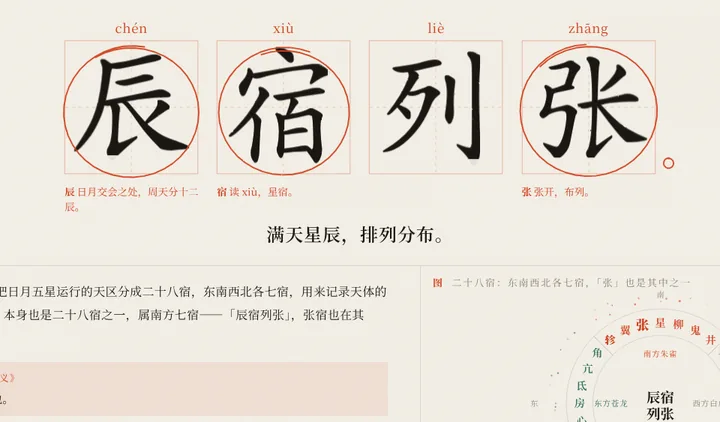 Shu·1The Thousand Character Classic: One Line, One SceneAll 250 lines written out and annotated, one by one; a panorama of the 1,000 characters, from which you can even assemble your name
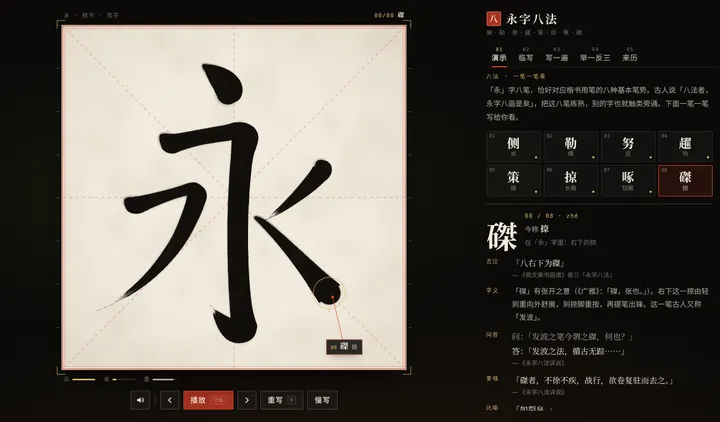 Zi·2The Eight Strokes of YongA simulated brush writes the character 永 for you stroke by stroke, then invites you to copy it yourself
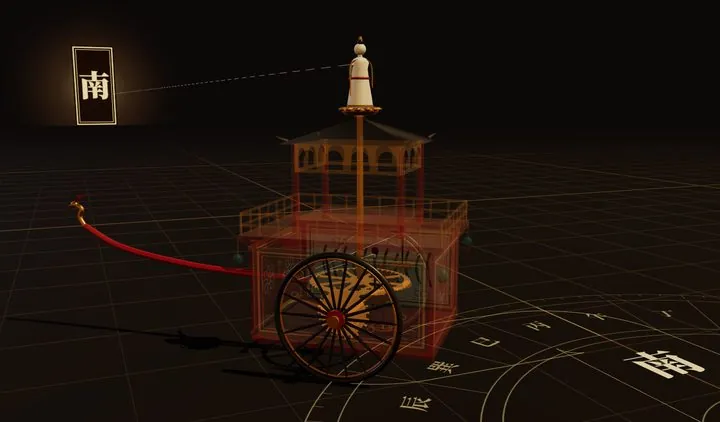 Hai·3The South-Pointing ChariotYan Su’s design: nine wheels, 120 teeth
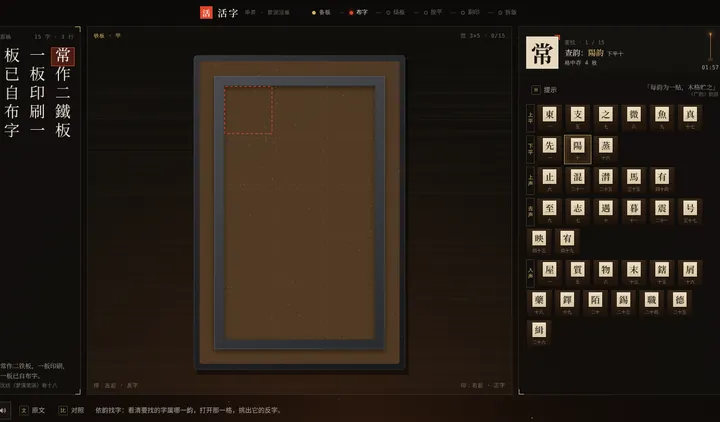 Ya·5Movable Type: Bi Sheng’s Clay TypeSet a plate of clay movable type by hand, as recorded in the Dream Pool Essays
 Jiang·1Can Chinese Tradition Be Revived in Web3?An hour-long talk, drawn as a map you can present or play with