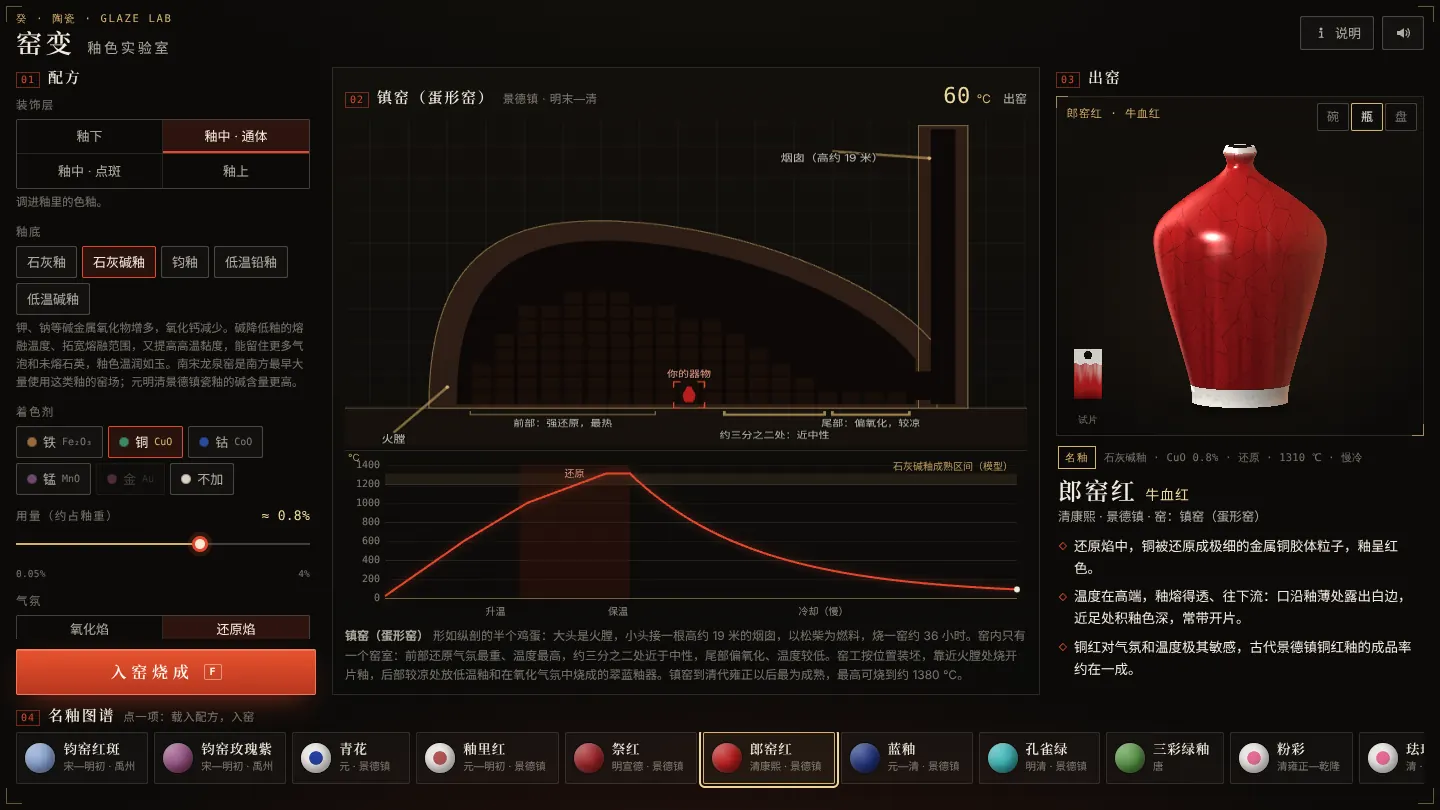
Tao·2Shaping Clay into Vessels: Pottery and Porcelain
Kiln Transformation
A glaze lab: mix the glaze, watch the fire, open the kiln
- Accession no.
- Tao·2
- Category
- Interactive works
- Period
- Han–Qing
- Directed by
- Hu Yilin
- Made by
- Claude Opus 5.5
- Similar commission
- from S$18.75
About the exhibit
Most colours of Chinese porcelain glazes come from just a few metals: iron, copper and cobalt, plus small amounts of manganese and gold. The same touch of iron turns celadon blue-green in a reducing flame but yellowish in an oxidising one; with more iron (over 4 or 5 per cent) the glaze gradually turns black, and if it cools slowly, crystals form on its surface — the source of the hare’s fur and oil-spot glazes of the Jian kilns and the persimmon glazes of northern kilns in the Northern Song. In a reducing flame, copper forms extremely fine particles of metallic copper, giving sacrificial red, Lang kiln red and underglaze red; in an oxidising flame it turns green instead, and in a low-fired glaze rich in potassium and sodium it shifts towards a turquoise like peacock green. Cobalt is insensitive to the kiln atmosphere: less than 1 per cent gives a deep blue, and blue-and-white is made by painting the body with cobalt pigment, glazing it and firing it once. The sky blues of Jun ware, tianqing and tianlan, come from somewhere else: they are an opalescence that arises when the glaze separates into two phases at high temperature and tiny droplets scatter blue light. It is not cobalt.
The glaze base changed too. Before the Song, porcelain glazes in the south all used calcium oxide as the main flux: lime glaze. In the Southern Song the Longquan kilns began to use, on a large scale, a lime-alkali glaze with a higher alkali content; it is more viscous at high temperature, so it can be applied coat after coat, building up thick, mellow glazes such as powder green (fenqing) and plum green (meiziqing). Jingdezhen glazes of the Yuan, Ming and Qing contained even more alkali. The kiln mattered just as much. The dragon kilns of the south, built up hillsides, burned wood and easily produced a reducing atmosphere; the mantou kilns of the north generally switched to coal in the Northern Song and tended to oxidise; Jingdezhen changed to the gourd-shaped kiln in the Yuan and, from the late Ming on, to the egg-shaped zhenyao kiln — most strongly reducing and hottest at the front, more oxidising and cooler at the rear — and kiln workers set different wares in different parts of the kiln. Overglaze enamels, by contrast, are painted on white porcelain that has already been fired, then baked again at a low temperature in an enamelling kiln; the shading of famille rose comes from glassy white, and its pink from colloidal gold.
This interactive work turns these relationships into a laboratory bench: set a recipe, load the kiln, watch the temperature curve and the fire and smoke inside, and when the piece comes out, compare it with the stories of the famous glazes. It is a teaching model, not a chemistry calculator: real glaze colours also depend on impurities in the raw materials, the thickness of the glaze, the position in the kiln and the whole course of the firing, so the percentages and temperature ranges in the work are only illustrative. A recipe that matches none of the famous glazes is labelled “Experimental result”, with the reason explained.
How this work was made
The work is written in plain JavaScript, without any external libraries or images. The vessels are drawn pixel by pixel: the surface normal and glaze thickness at every point are calculated from the vessel’s profile revolved around its axis, then running glaze, opalescence, kiln-transformation splashes, hare’s fur, oil spots, crackle and underglaze and overglaze painted patterns are layered on, and finally the lighting is added. The kiln cross-section, the flames and the smoke are drawn with Canvas, and the sounds of the kiln fire and the crackling glaze are synthesised live with WebAudio. The rules for glaze colour are compiled from papers on the history of ceramic science and technology, materials-science sources and museum object descriptions; see the sources below. Where scholars still disagree, as over the date of “official Jun” or the cause of the “iron spots” in blue-and-white, the work sets out the disagreement as it stands.
Sources and references
- Luo Hongjie, Li Jiazhi and Gao Liming, Criteria for Classifying Calcium-Based Glazes in Ancient Chinese Porcelain and Their Application in Glaze Research, Bulletin of the Chinese Ceramic Society, 1995, no. 2
- Kepu China, Ash glaze (ash glaze uses calcium oxide as its main flux, with a calcium oxide content above 10%)
- Data-driven research on chemical features of Jingdezhen and Longquan celadon by EDXRF, arXiv:1511.07825 (citing Zhang Fukang and Li Jiazhi on how alkali affects the viscosity and jade-like quality of glazes)
- China Intangible Cultural Heritage Network: Longquan celadon firing techniques (repeated glazing; powder green and plum green; dragon kilns)
- Wikipedia: Longquan celadon
- Wikipedia: Celadon
- Wikipedia: Qingbai ware
- University Museum and Art Gallery, The University of Hong Kong, object description: a pair of qingbai dishes with foliate rims
- Seattle Art Museum: Bowl (qingbai), label text
- Victoria and Albert Museum: Qingbai ware (O127906)
- University of Michigan Museum of Art: Bowl 1973/2.16
- Wikipedia: Ding ware
- Wikipedia: Mantou kiln
- Wikipedia: Dragon kiln
- Wikipedia: Jingdezhen porcelain
- Shelagh Vainker, paper for the GEHN Les Treilles meeting, LSE (zones of the egg-shaped kiln: strongly reducing at the front, near neutral about two-thirds of the way back, oxidising at the rear)
- China Intangible Cultural Heritage Network: the Jingdezhen zhenyao kiln (mature after the Yongzheng reign; up to about 1380 °C; pinewood fuel)
- Chinese Social Sciences Net, 2023-02-02: mantou kilns (semi-downdraught; in the north mostly fired with coal after the Tang)
- Chinese Social Sciences Net, 2024-08-30: history of porcelain-making technology at Jingdezhen (the gourd-shaped kiln of the Yuan; the first production of blue-and-white, underglaze red and blue glaze)
- C. Dejoie et al., Learning from the past: rare ε-Fe₂O₃ in the ancient black-glazed Jian (Tenmoku) wares, Scientific Reports 4, 4941 (2014)
- S. Tao et al., Micro-structural and compositional study: ε-Fe₂O₃ crystals in the Hare’s Fur Jian ware, Research Square preprint (2021)
- Wikipedia: Jian ware
- Raman study of rusty oil spotted glaze produced in Linfen kilns (Shanxi province, AD 1115–1368)
- Digitalfire Reference Library: Tenmoku; Iron Oxide
- Digitalfire Reference Library: Kaki
- Asian Civilisations Museum, Singapore: Russet-glazed ewer (Roots.gov.sg)
- J.J. Lally & Co.: A russet-glazed Dingyao cupstand
- Wikipedia: Jun ware (including the British Museum’s dating of “official Jun”)
- China Intangible Cultural Heritage Network: Jun porcelain firing techniques; kiln transformation in Jun porcelain
- China Intangible Cultural Heritage Network: feature on high-fired copper-red glazes (colloidal copper; yields; Lang kiln red; replaced by low-fired red enamel after the Jiajing reign)
- China Intangible Cultural Heritage Network: traditional coloured glazes of Jingdezhen (the Records of Jingdezhen Ceramics on sacrificial red and sky-clearing red; copper turns green in an oxidising flame and red in a reducing one)
- Wikipedia: Sang de boeuf glaze
- Fondation Baur, Musée des arts d’Extrême-Orient: monochromes (Lang Tingji, 1705–1712)
- Asia Society Museum: Dish with underglaze copper red, 1979.154
- The use of copper red in Chinese ceramics (based on Nigel Wood, Chinese Glazes, 1999)
- Wikipedia: Blue and white pottery
- Xiong Lu et al., Chemical Compositions of Co-Based Materials in Yuan Dynasty Blue-and-White Porcelains, Journal of Ceramics, 2024, no. 3
- Wang Wen-xuan et al., The Microstructure of “Iron Spot” on Blue-and-White Porcelain From Jingdezhen Imperial Kiln in Yongle and Xuande Period, Spectroscopy and Spectral Analysis, 2023, no. 1
- Ashmolean Museum, Eastern Art Online: object 22143 (heaping and piling in Yongle and Xuande blue-and-white)
- Digitalfire Reference Library: Cobalt Oxide
- Digitalfire Reference Library: Copper Oxide
- Digitalfire Reference Library: Manganese Oxide
- Wikipedia: Sancai
- Wikipedia: Ceramic glaze
- Wikipedia: Famille rose
- Wikipedia: Falangcai
- Wikipedia: Overglaze decoration
- Wikipedia: Chinese ceramics
- Study on the Influence of Calcination Temperature of Iron Vitriol on the Coloration of Ancient Chinese Traditional Iron Red Overglaze Color (PMC11204637)
Want something like this? See how to commission an interactive teaching page →
Spotted an error in the history, data or sources? Please write to [email protected].
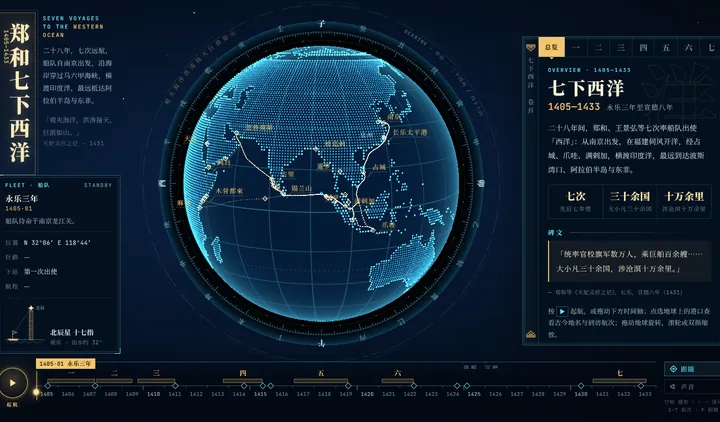 Hai·1Zheng He’s Seven VoyagesSeven voyages, drawn on a globe you can turn
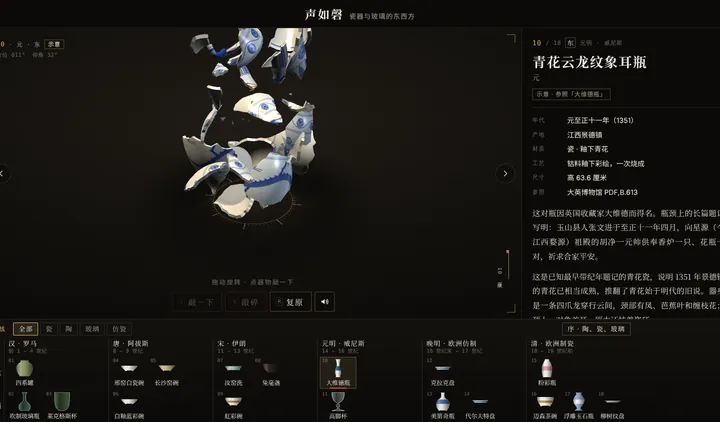 Tao·1Ringing Like a Chime StonePorcelain and glass, East and West
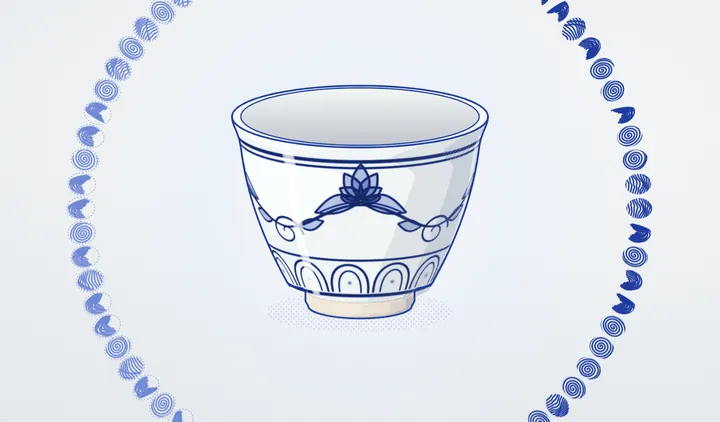 Tao·3Seventy-Two HandsFollowing The Exploitation of the Works of Nature, make a Jingdezhen blue-and-white cup by hand, stage by stage
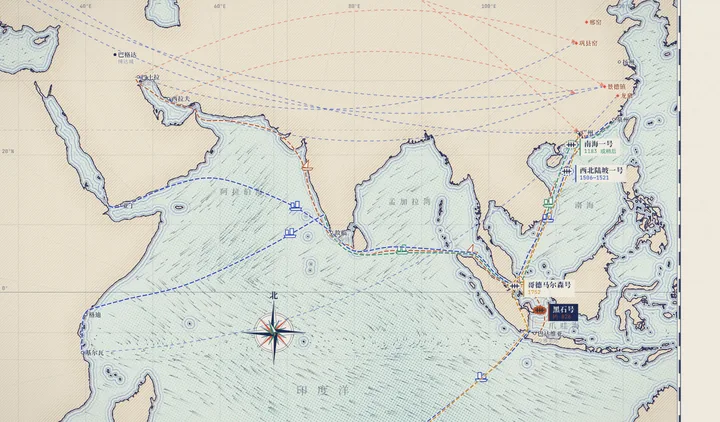 Tao·4The Porcelain Sea RoadBring up a ship’s cargo and see how it changed both shores