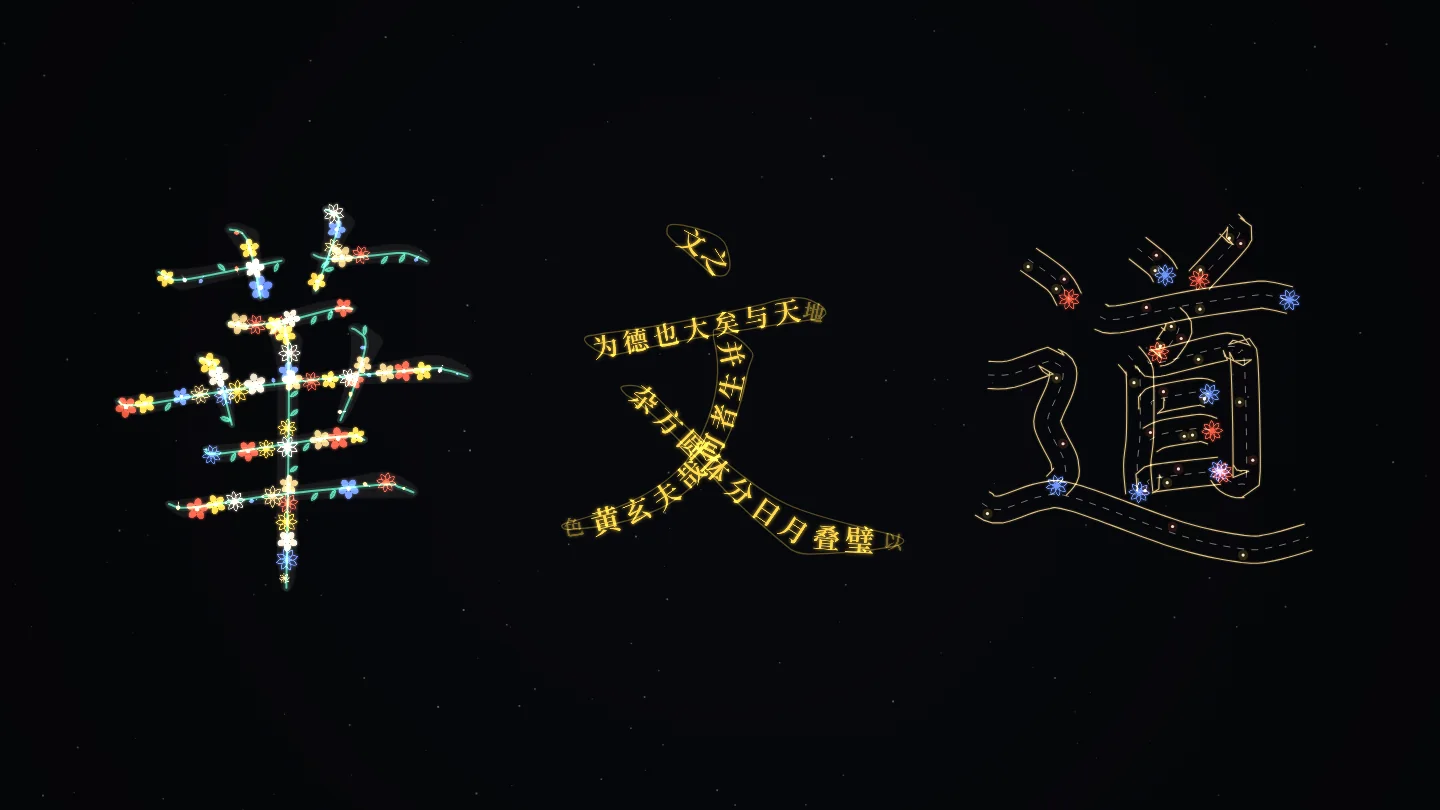
Men·3Entrance Hall
Hua · Wen · Dao
A flower opens and its petals settle into 華; writing flows inside 文; the strokes of 道 grow into roads
- Accession no.
- Men·3
- Location
- Entrance Hall
- Category
- Motion and generative art
- Directed by
- Hu Yilin
- Made by
- Claude Opus 5.5
- Similar commission
- from S$18.75
About the exhibit
華 (hua) is the old way of writing “flower”. A point of light opens into a flower, drawn ring by ring: the heart, cloud scrolls, lotus petals, honeysuckle, a band of pearls and a graduated ring, with a line of poetry about flowers written around the rim in true stroke order. The rings part like the rings of an armillary sphere, turn, and close again, and the petals settle into a large 華. The second movement writes 文 (wen, “writing”): an old text about writing flows inside every stroke, and rings of characters turn around it. In the third, 道 (dao, “road, way”) is made of roads that grow out from the ends of its strokes, flower at the crossroads, and carry lines of travelling characters. In the finale all three are written at once — 華 in flowers, 文 in words, 道 in roads — and close into a single seed; the next round grows another flower and another poem.
How this work was made
Everything is drawn live in your browser; there are no image files. The flower’s patterns come from traditional ornament — pearl bands, honeysuckle, lotus petals, cloud scrolls, a rosette — with the graduated ring of an instrument around them. The inscription and the three large characters are written in true stroke order using the open-source Make Me a Hanzi data, derived from Arphic’s AR PL fonts. The road network grows afresh from every seed. The music is synthesized live in your browser too, with no recordings: the program imitates the guzheng and guqin, bronze bells, a big drum and a bamboo flute, over synthesizer pads, bass and arpeggios. Each new seed brings another pentatonic mode and melody, and each movement has its own instruments, rising and falling with the picture.
Sources and references
- Quotations: the Book of Songs (“Tao Yao”); Zhou Dunyi, “On Loving the Lotus”; Tao Yuanming, “Drinking Wine”; Bai Juyi, “Peach Blossom at Dalin Temple”; Liu Xie, The Literary Mind and the Carving of Dragons, “Tracing the Dao”; Xu Shen, Shuowen Jiezi, postface; Qu Yuan, “Li Sao”; Laozi, chapters 1 and 64. English translations are our own
- Stroke data: hanzi-writer-data 2.0.1 (the Make Me a Hanzi project, derived from Arphic’s AR PL KaitiM and UKai fonts), Arphic Public License
- Font: Noto Serif CJK SC, SIL Open Font License 1.1
Want something like this? See how to commission an online exhibition →
Spotted an error in the history, data or sources? Please write to [email protected] and let us know.
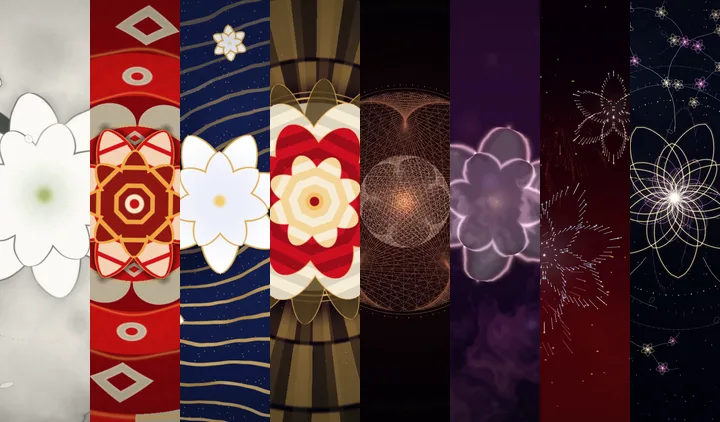 Lü·4Jasmine Flower in Eight VersionsOne folk tune from Jiangnan, played eight ways: from silk-and-bamboo to Nagasaki, Milan, Hong Kong and the Nanyang
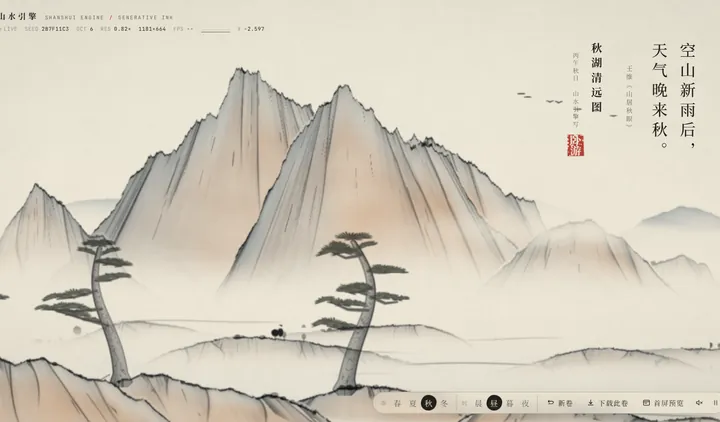 Ya·2The Three Distances of LandscapeAn ink landscape scroll, generated in real time
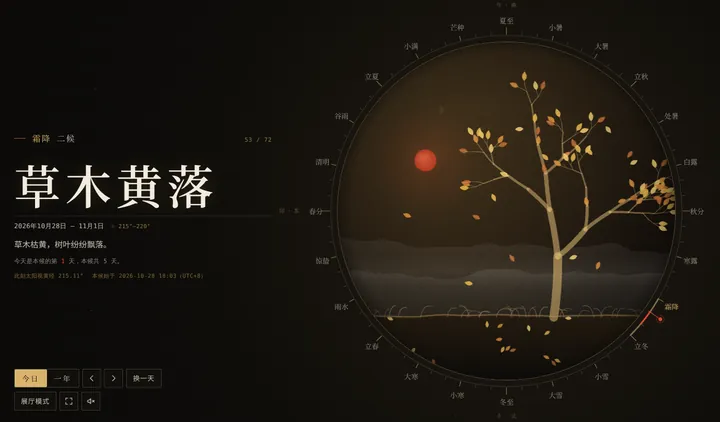 Tian·4The 72 PentadsFive days to a pentad: 72 generated vignettes cycling through a whole year
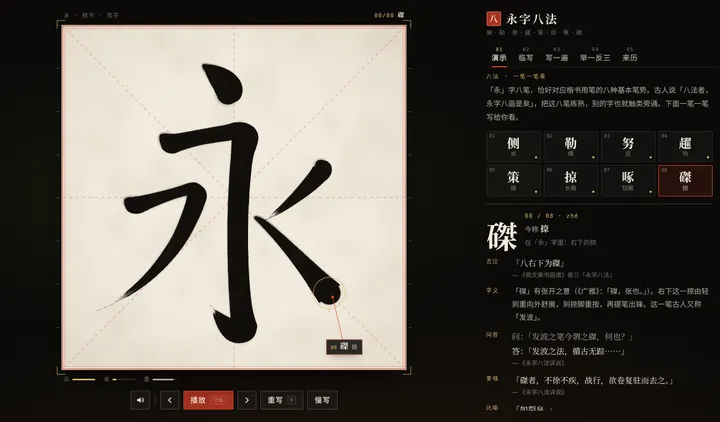 Zi·2The Eight Strokes of YongA simulated brush writes the character 永 for you stroke by stroke, then invites you to copy it yourself
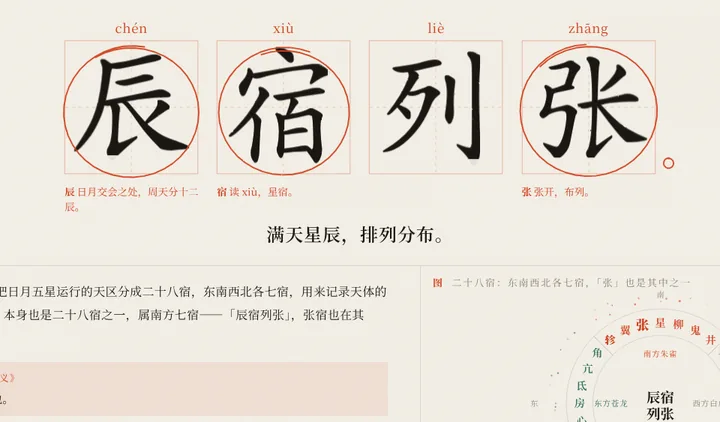 Shu·1The Thousand Character Classic: One Line, One SceneAll 250 lines written out and annotated, one by one; a panorama of the 1,000 characters, from which you can even assemble your name